More about film
Catching light on film
Why we photograph weddings on film: in which moments, for which couples, and the emulsions we use.
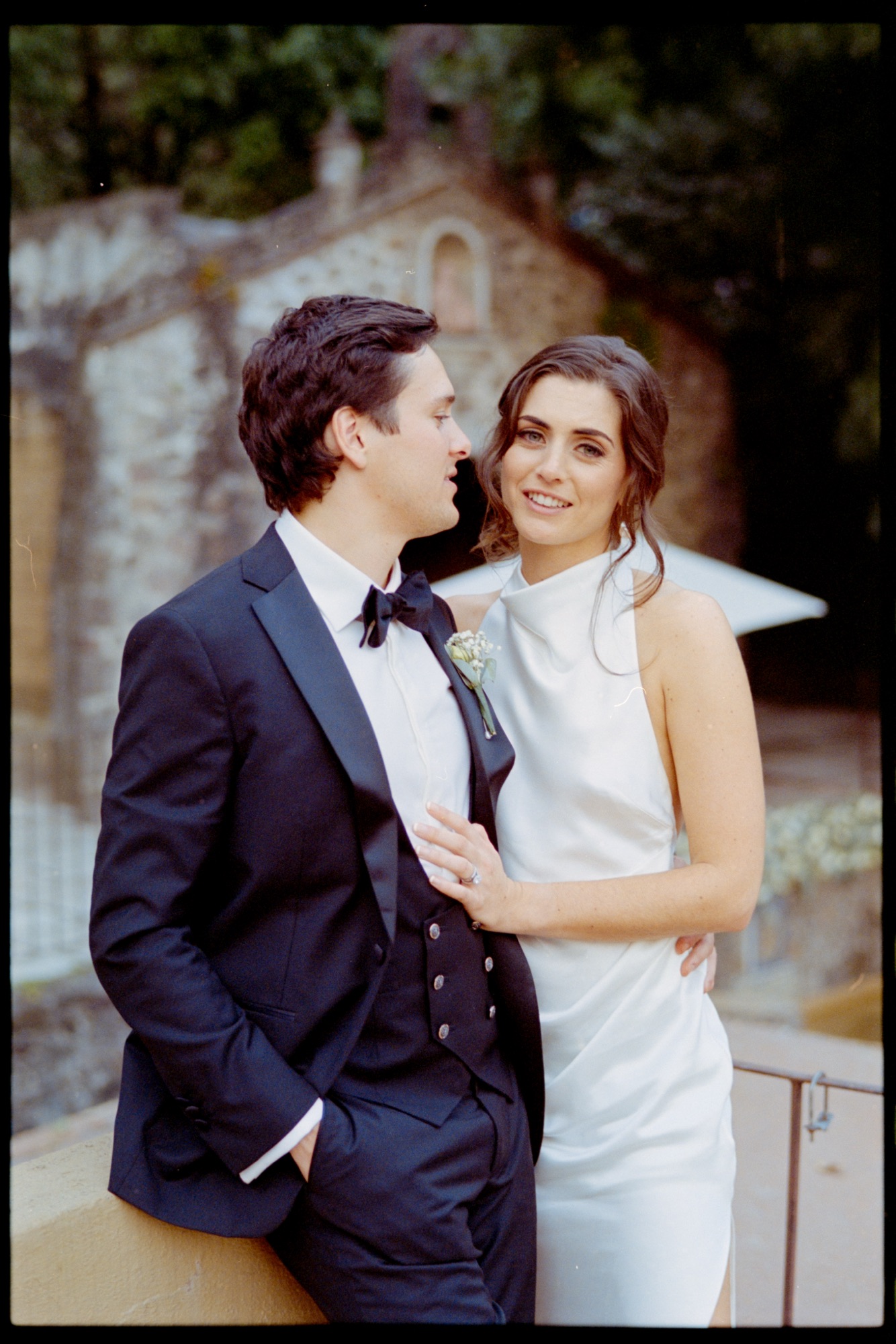
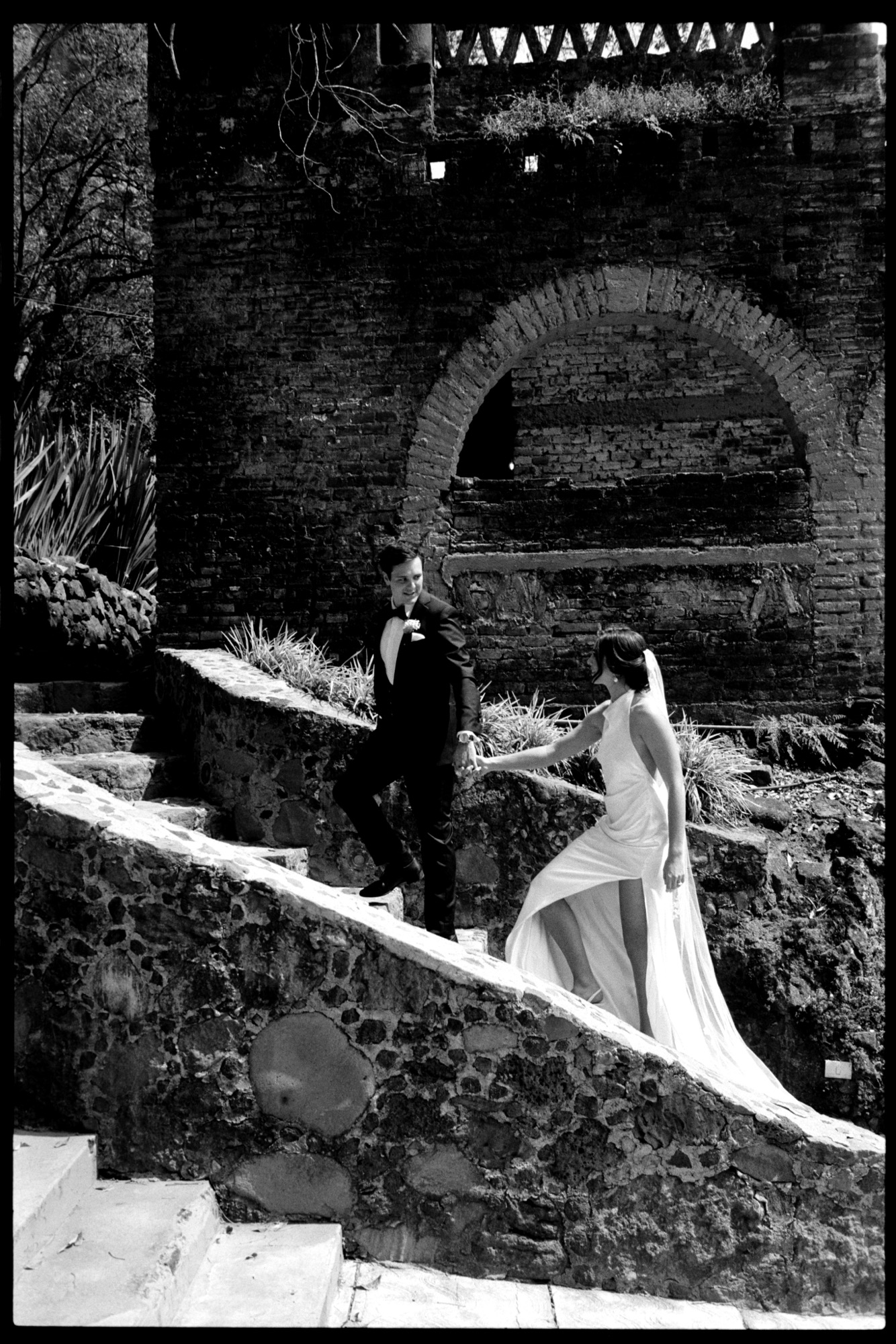
The quiet magic of catching light on a gelatin surface, not on a digital record.
Why film
A couple from Australia gave film back to me
I learned to shoot film years ago, but I moved to digital so smoothly that I lost sight of how valuable it was. For a long time I emulated the film "look"… when I could have been taking real photographs all along.
Then a couple from Australia asked me for a few frames on film. What seemed like a simple task became a hobby full of passion and new friends, and I think that's what life is about.
The moment
Pablo & Kiara's first kiss
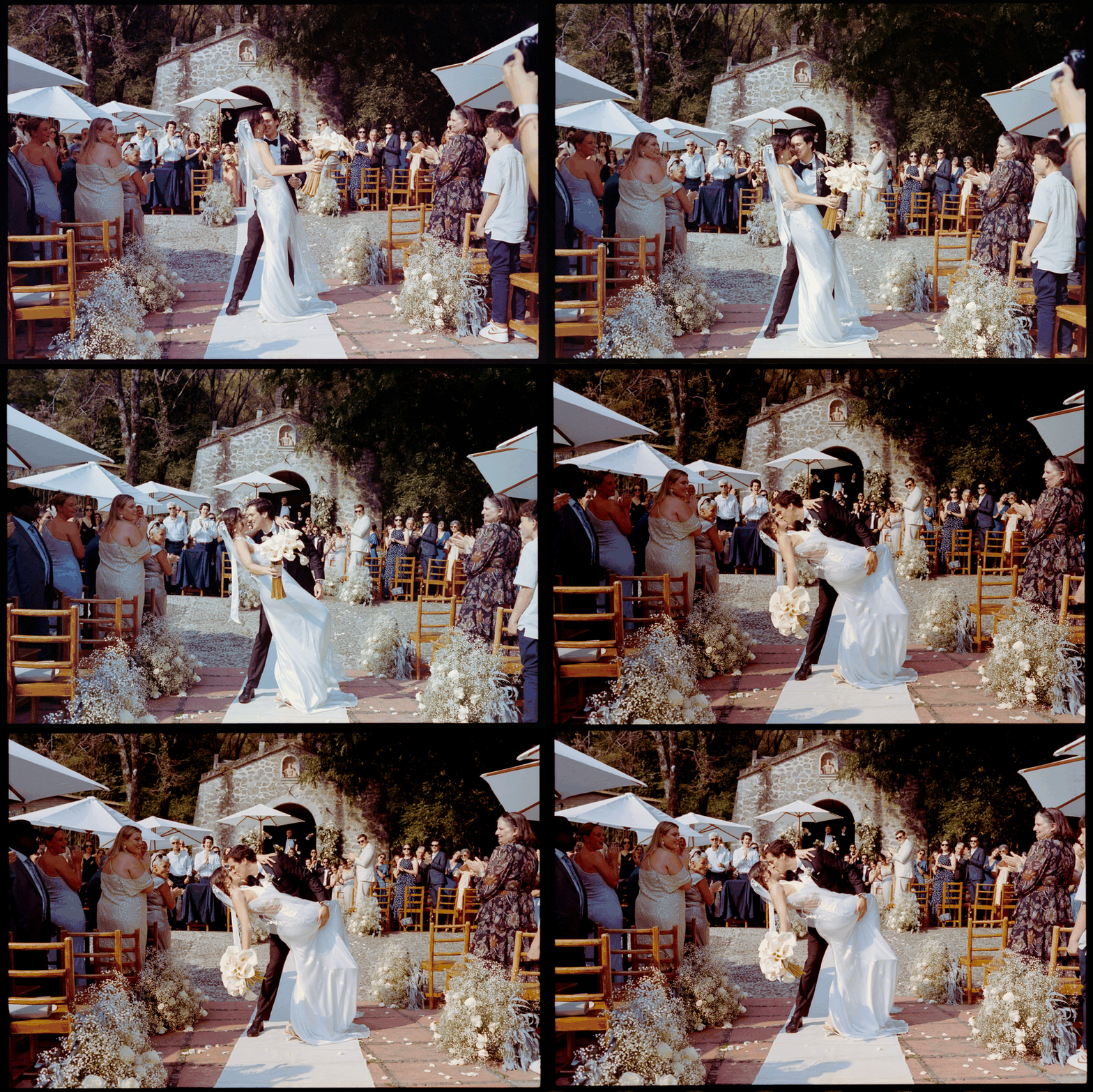 Pablo & Kiara · on film
Leaving the ceremony, at their first kiss, I decided to use film. I risked something not coming out right, but I knew that instant would be truly captured: I caught the light in a moment of their story.
That image lives more vividly in my memory than any digital one. Not because digital isn't worth it, but because with film you put all your skills on the line and trust what you know how to do. Even after all these years, knowing it's a unique moment that will never happen again makes me nervous and excited at the same time: the adrenaline of bringing everything together for that one instant.
The films
Four emulsions, each with its own character
Fresh Kodak film, the new remjet-free formula, chosen for the light and the time of day.
Kodak Vision3 500T
For low light
High speed, tungsten balanced. The film for interiors and for the party once night falls.
Kodak Vision3 250D
For daylight
Daylight balanced, clean tones and beautiful skin. The film for outdoors and ceremonies in natural light.
Eastman Double-X (XX)
Classic black and white
Grain with character, timeless contrast. The black and white that has told stories for decades.
Kodak 200D
The newest recipe
Kodak's most recent daylight emulsion: modern, versatile, with the best of today's film look.
We shoot on Kodak emulsions. The brand and film names are the property of Eastman Kodak Company; Inquadratura is not affiliated with Kodak.
Motion picture film
The finest emulsion there is
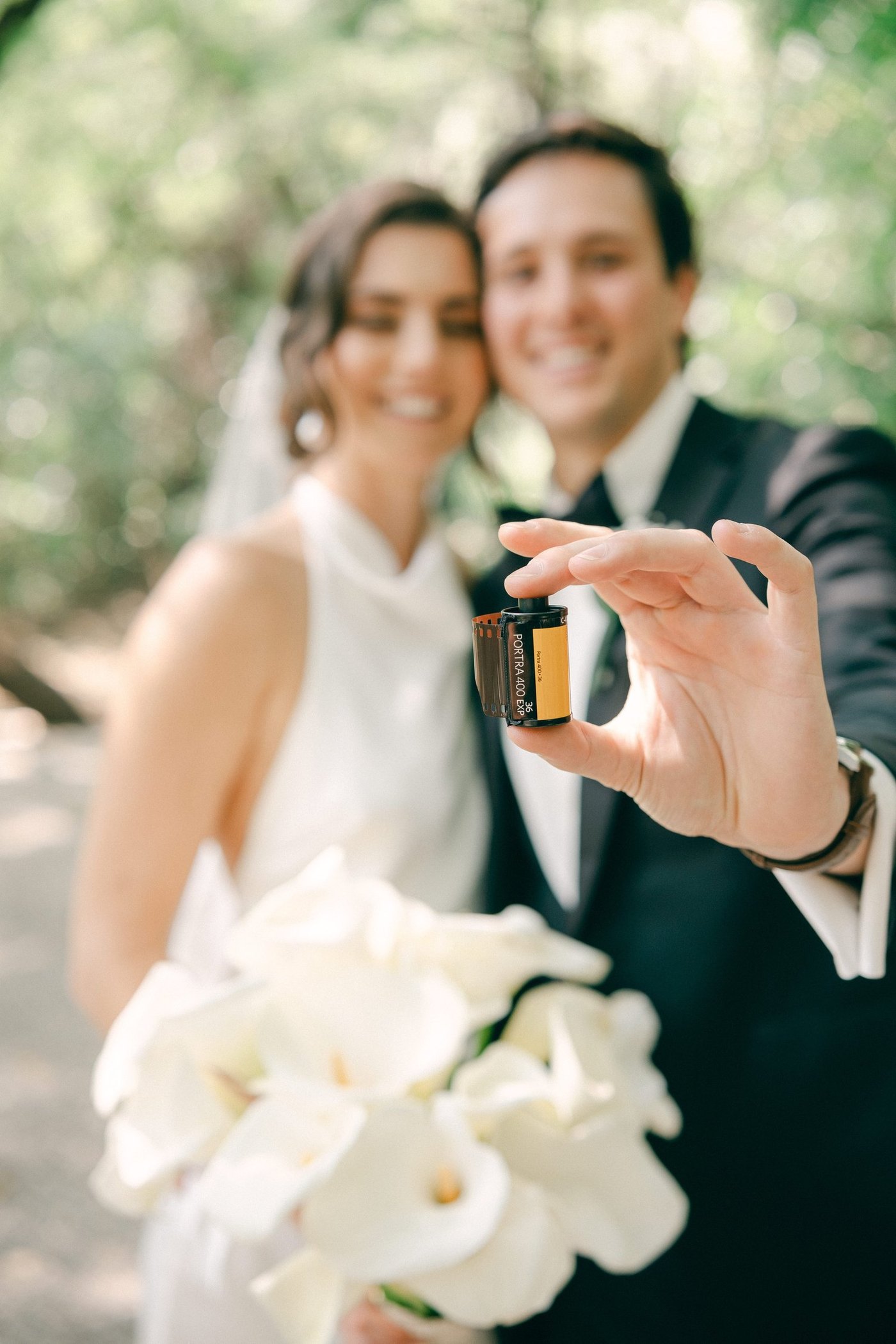
We shoot on motion picture film, the same stock movies are made on. We work with fresh Kodak film, its new remjet-free formula, not old stock. The image forms on real silver crystals: a physical negative that exists outside any hard drive.
The cameras
35 mm, from advanced automatic to classic
Nikon F100 / F5
Advanced automatic SLR
Autofocus and metering as precise as a modern digital camera, but on film. So we never miss a moment of the day.
Leica M6
Classic, elegant rangefinder
Small, quiet and beautiful. The camera for portraits that last, to get close without interrupting.
Pentax 17
Half-frame: twice the shots per roll
Half-frame format: it doubles the shots on every roll to make the most of each moment of the day.
Based in Mexico City, we shoot destination weddings wherever the story takes us, across Mexico and beyond.
The process
We develop at home: we care for the process, we don't chase perfection
I do everything myself, from sourcing the film to developing and scanning. There are very good labs in Mexico, but I found a lot of misinformation: negatives get digitized with technology that doesn't do them justice. And like anything, if you want it done right, do it yourself.
I develop on a dedicated day, in C-41 with fresh chemicals and an automated system (AGO) that controls time and temperature to guarantee the result. It demands 100% of your attention: handling the chemicals, the order, the care of the negative. And something curious happens: as soon as I start, my phone and screens stop existing. All your attention is on getting an image.
The most exciting part comes at the end: you take the roll off the reel and, seeing the first image, you remember that exact moment, as if by magic.
But the adventure is only beginning: looking at the negative and waiting for the positive. No matter how many negatives you see, nothing compares to seeing the image in its true colors.
Film or digital
The best of both worlds
We never shoot only on film: the base coverage is digital, so we never miss a moment, and film comes in for the images that become treasures. You don't have to choose: you decide how much film you want.
Who it's for
For couples who think twenty years ahead
Film shines where texture and emotion matter more than volume: portraits, afternoon light, the first look. It's for people who value things made by hand and want images that will still feel real twenty years from now, not the perfect catalog photo.
With nearly 19 years as a wedding photographer and a little under 2 years back on film, I'll be honest: not every wedding calls for film, and not every couple values me bringing a roll camera. And that's fine. Those who value it appreciate all the steps behind it. If these images move something in you, that's the path.
What you receive
Your day, to come back to
A wedding usually takes between 5 and 10 rolls. It's an investment, but the result is worth it. Sometimes a couple wants only part of the session on film: a dedicated space, with no digital backup. To me, that's the kind of photograph that adds value.
One important detail: what you receive is the scanned, digitized photograph. The image is born from how the negative is interpreted. What you see here as examples is what you receive, in higher-quality files.
Now it's your turn
What do you love about film?
You've read about film, and we'd love to hear from you. Do you have a story, a memory or a moment you'd like to share? Tell us, and let's talk about your wedding.
Tell us about your weddingNot affiliated with Eastman Kodak Company. Film names are used for descriptive purposes only.